Independent media
Sell your documentaries and keep YouTube for discovery
The episodes stay open to all, the documentaries move behind a subscription.











Who it is for
Your audience knows you through a platform, not through your address.
What it settles
- A channel at your address, showing only your videos
- Free, account or subscription, set video by video
- Your partners, your members, your newsletter
Products used
You can sell your documentaries from a Videas channel at your own address, by monthly or annual subscription or singly, bought outright or rented. Episodes can stay free while documentaries are reserved, locked but visible, and every viewer creates an account with you. YouTube keeps its role in getting you discovered; nothing is imported from it automatically.
“Carottage” is an earth-science explainer outlet invented for this walkthrough: eight years of videos, a loyal audience. Inès Valadier writes and presents, Malo Kerguen directs, Jade Roussel looks after the community.
Documentaries that cost a shoot and earn nothing
The short episodes do well. The problem is elsewhere: documentaries of forty to eighty minutes cost a shoot, and there is nowhere to offer them other than for free.
And after eight years, Carottage does not know its audience. Counters, yes. Names, no. No list to announce a film to, no way back to the people who keep coming back.
A channel of your own, showing only your videos
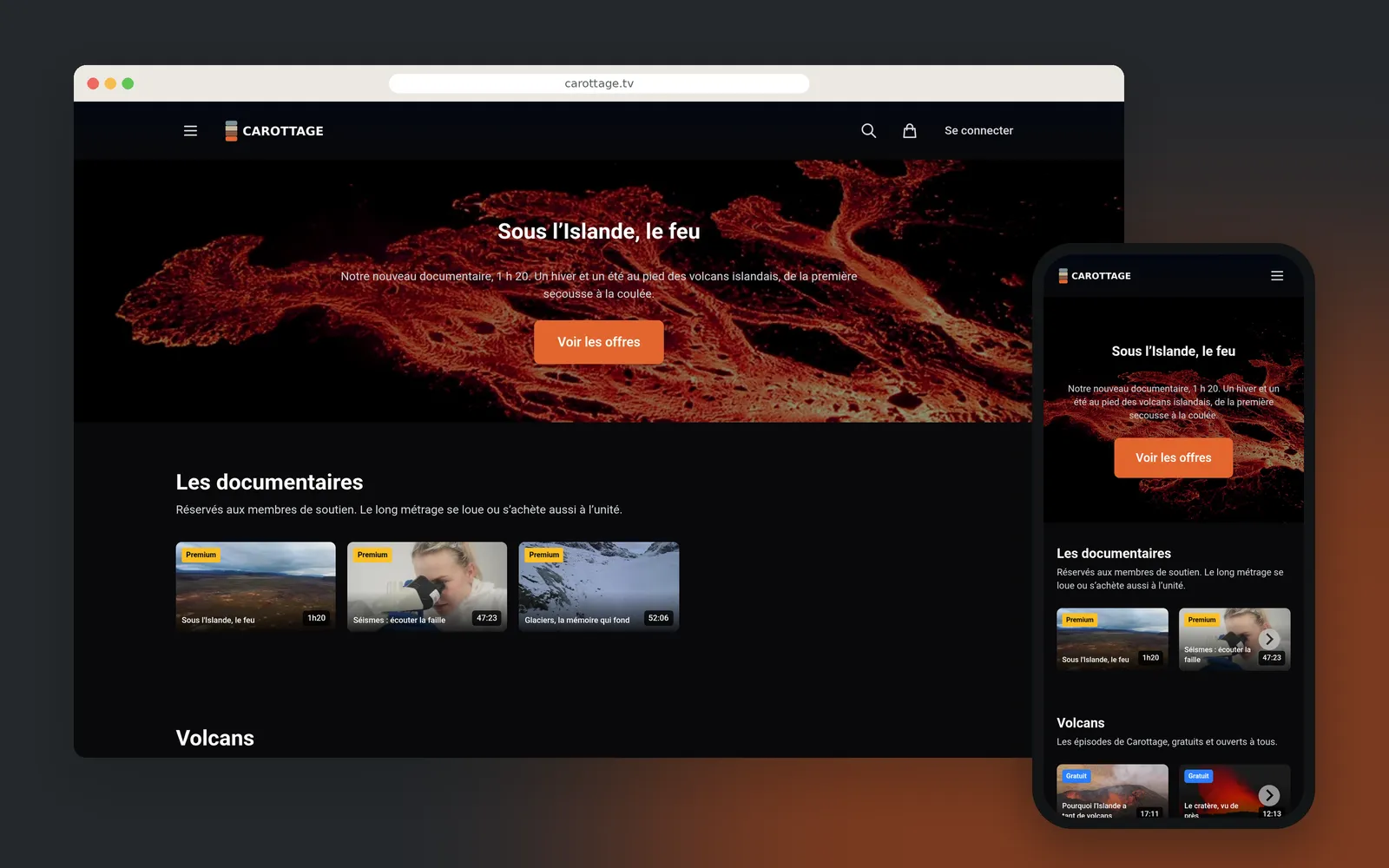
The channel sits at the outlet’s address and in its colours. The episodes stay open to everyone, the behind-the-scenes needs a free account, the documentaries open to subscribers, and the feature film also sells singly, outright or on rental. It is set video by video.
A reserved video stays visible, locked: artwork, length, summary. And beside an episode you find only other episodes of Carottage.
The files are the ones on Malo’s drives, uploaded from the browser and hosted as they are, subtitled by Scribe. Nothing is brought over automatically from anywhere, subscribers included: every viewer creates an account here.
Its partners, its members, its newsletter
The brand funding the Glaciers season runs before episodes embedded in the magazine’s articles, from the address its ad server supplies. On the channel’s pages there is no advertising at all: Carottage decides whether there is any, whose, and where.
And there is finally a list: members with their plan, the newsletter to the people who accepted it, comments with names attached. Announcing a documentary no longer depends on what a feed decides to show.
YouTube keeps its job: that is where Carottage is discovered, through clips and trailers leading back home. The shop window on one side, the work on the other.
A real outlet has been through this: France-Soir now distributes its videos with Videas, in its articles and on its own web TV.
How it works, step by step
The channel, at its own address
Logo, colours and domain of its own. The episodes filed by theme, the documentaries featured, and badges that say at a glance what is open, what needs an account and what is for subscribers.
A free episode
Open to all, no account, subtitled. Beside the video, other episodes from Carottage and only from Carottage: the end of one leads to the next.
A reserved documentary
Locked, but not hidden: the artwork, the summary and the length stay there. A forty-minute film that cost a shoot shows itself before it sells.
The formulas
A monthly or annual subscription opening the documentaries, and the feature also sold singly, outright or on rental. The occasional viewer and the regular supporter do not use the same door.
The advertising settings
The VAST address the partner's ad server provides, the delay before Skip, the excluded domains. Videas adds no advertising: this one is there because Carottage decided so.
Before the episode
The partner funding the season runs ahead of episodes embedded in the magazine's articles. On the channel's own pages there is no advertising at all.
The members
Who registered, who subscribed, who accepted the newsletter, who came back recently. For the first time in eight years, Carottage knows its audience as something other than a counter.
The newsletter
Announcing a documentary to the people waiting for it, without depending on what a feed decides to show. Everyone unsubscribes in one click.
The comments
From people who hold an account with Carottage, moderatable before publication. Jade answers in the channel's name, under the channel's name.
The audience
Devices, traffic sources, the sites that send people to the channel. Enough to know what brings an audience, and what does not.
What our customers say about us
Videas enabled us to create a genuine connection between our French and Canadian teams. The platform has become the go-to hub for our internal communications: every employee can access content in their language, react, and get involved, wherever they are.
The Videas Web TV has become a must-attend event for our teams. The weekly live streams with the CEO have transformed our internal communications: employees ask questions live, react, and get involved. We've gone from one-way communication to a genuine dialogue.
Your solution is top quality, your team is responsive and attentive, and the results amply exceed our expectations. We hope to work with you for a long time to come, as you contribute to our success.

Frequently asked questions
Where do you sell documentaries when you live off your videos?
On a channel at your own address and in your own colours, where you decide what is free, what needs an account and what is reserved for subscribers. YouTube keeps its job, which is getting you discovered; your channel holds the rest.
Do you have to leave YouTube to open your own channel?
No, and it is rarely a good idea: an audience is built where it found you. In this walkthrough Carottage keeps publishing clips and trailers there that lead back to its channel, whose link sits in its footer.
Can you bring over your videos and your YouTube subscribers?
The videos you upload yourself, from your original files, the ones on your own drives: there is no automatic import. The subscribers do not come either: every viewer creates an account with you. That is what makes this audience yours.
How do you reserve some videos for members or subscribers?
Video by video or section by section: open to everyone, open to registered users with a free account, or reserved for subscribers. A protected video stays visible, locked, with its artwork, its length and its summary: it invites rather than disappearing.
Can you sell a documentary singly and offer a subscription?
Both together: a monthly or annual subscription opening the catalogue, and the single sale of a film, bought outright or rented for a period you set. You can also create promo codes and give subscriptions away.
Can viewers support you financially?
When paying for a film, a viewer can add a support contribution of whatever amount they choose. It is added to a purchase or a rental, not to a subscription, and does not exist on its own.
Can you run your partner's advert before your videos?
Yes, before videos embedded on your own site or elsewhere, from the VAST address your partner's ad server gives you. You set the delay before Skip and the excluded domains. Videas adds no advertising and sells none: you choose whether there is any, and whose.
Are a channel's pages indexed by Google?
Each video has its own page, with its address, title and description, and the channel publishes a sitemap and the tags that make a decent preview when shared. It is indexable like any site; no ranking is promised for that.
How do you keep in touch with your audience?
Through members: the list, their plan, their last activity, exportable. And through the newsletter sent from the channel to those who opted in, with one-click unsubscribe. The comments and likes come from people you know by name.
Can viewers watch on their television?
Yes, through Chromecast or AirPlay from the player. The channel works in a browser, on computers, phones and tablets: there is no mobile app and no TV app.
More scenarios
All scenarios →Studios & production companies
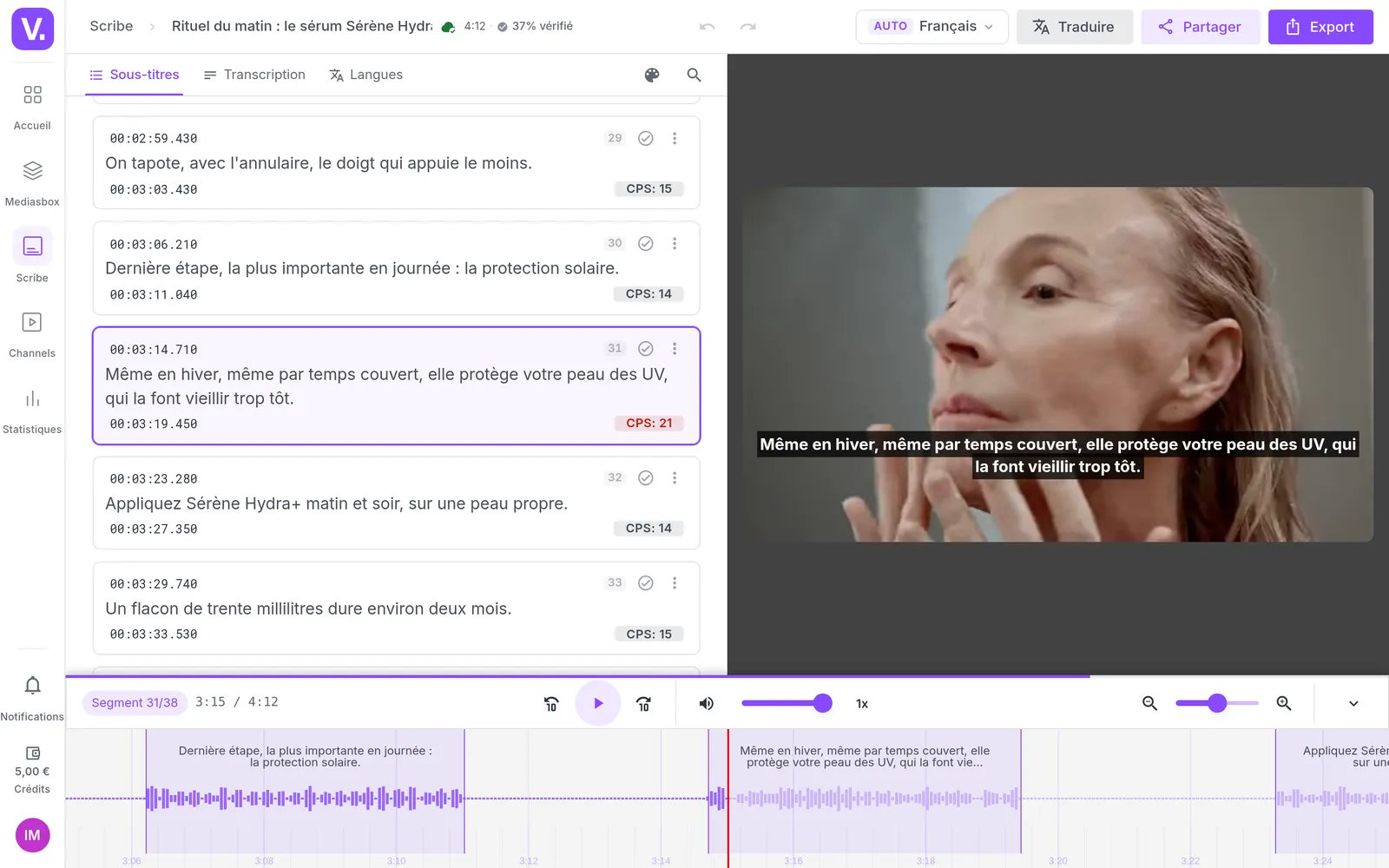
Have your client approve the subtitles, line by line
The client reviews the subtitles line by line from a link, and the agency decides.
Creators & coaches
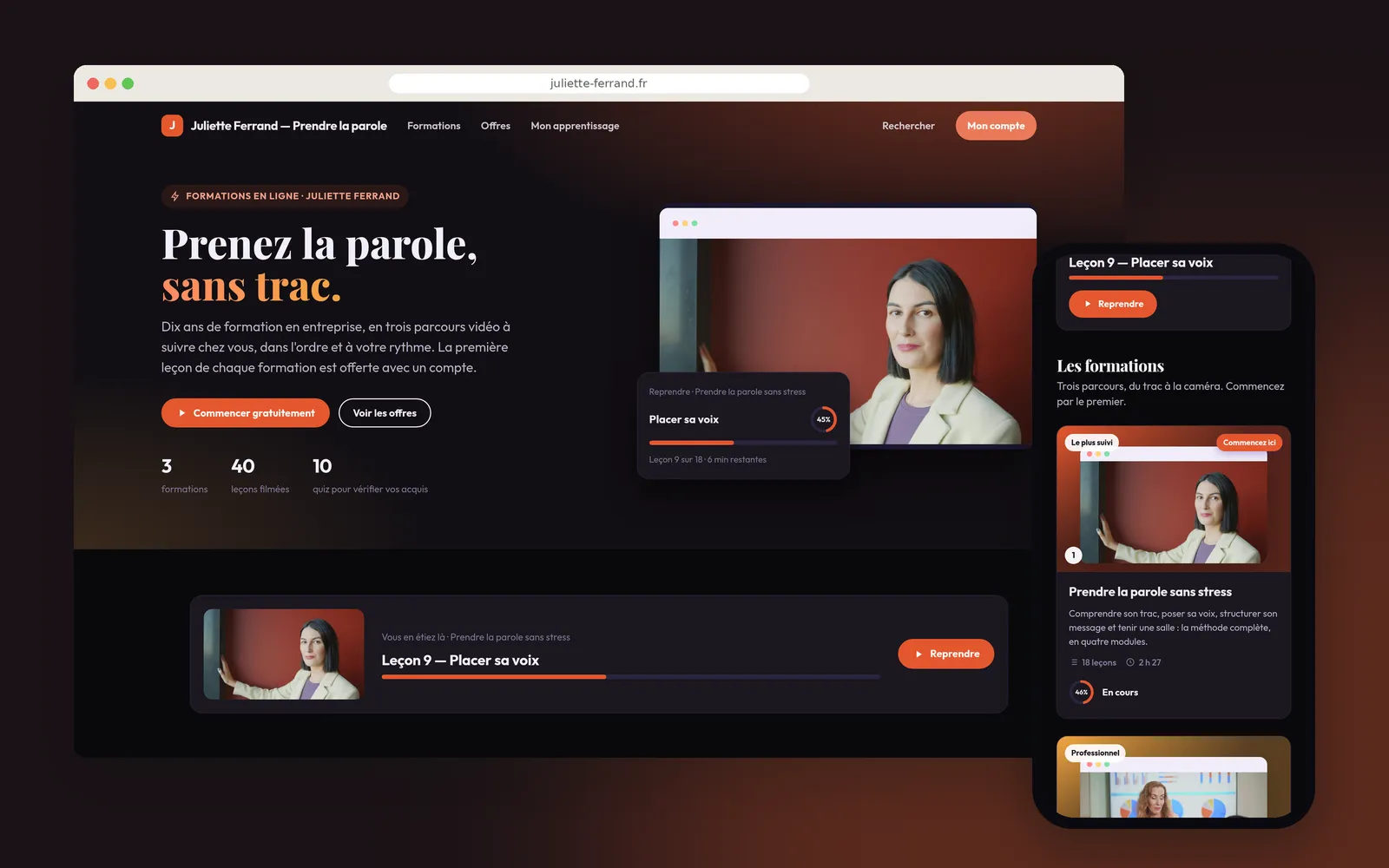
Sell your courses as a path, on a site of your own
Lessons in order, notes taken while watching, and tracking of who is moving.
Creators & coaches
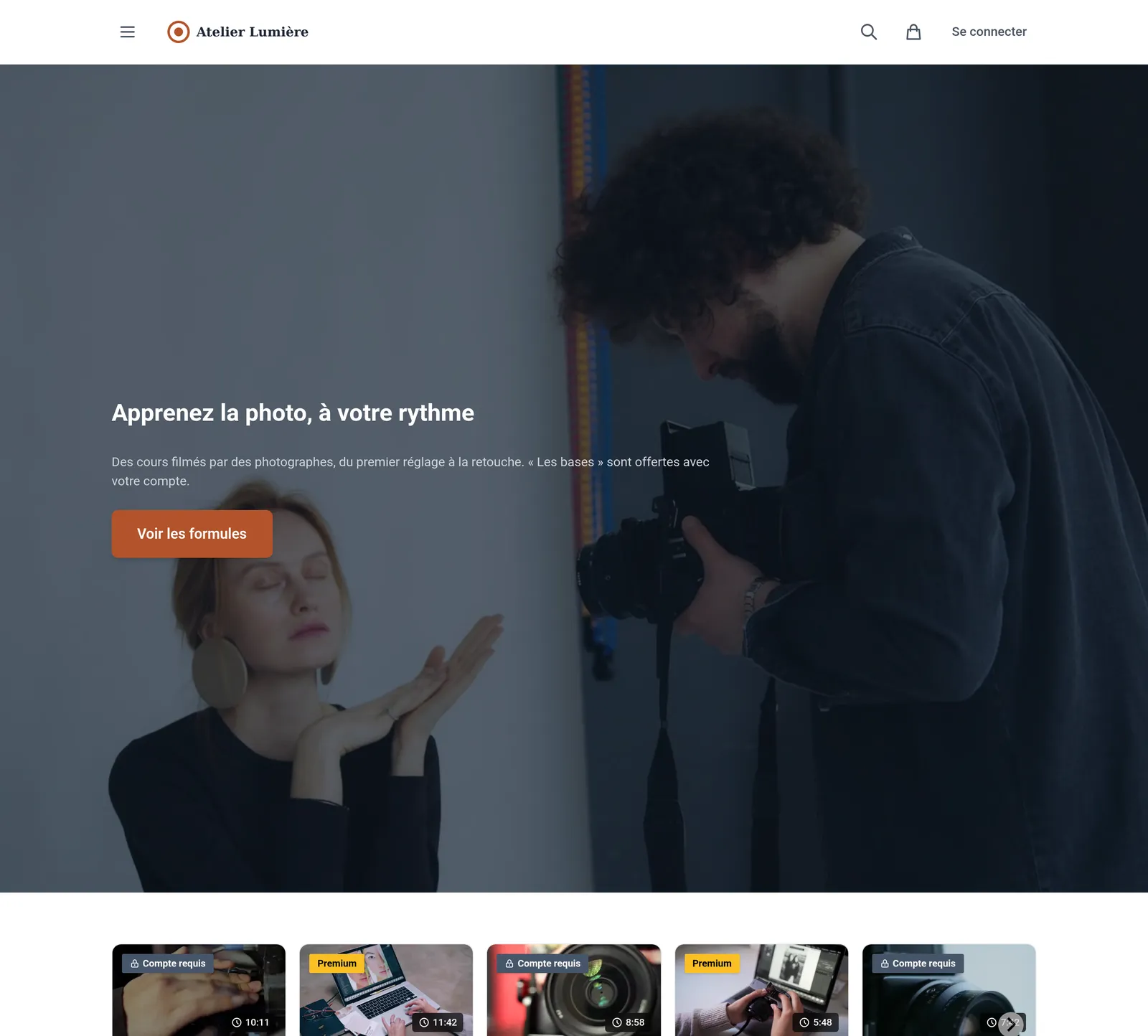
Sell your filmed classes, by subscription or singly
A branded site, locked classes that stay visible, and two ways to pay.