Publishing video in the public sector: the 3 rules to follow
In the public sector, putting a video online is not an act of communication: it is an administrative act. Three rules govern what you publish: accessibility, which the EU Web Accessibility Directive imposes with no size threshold; the data of your visitors, which the GDPR protects right down to the player; and your archives, because a council session or an information campaign stays a public record long after it airs. A public sector video platform has to follow all three. YouTube breaks them one by one.
Videas answers all three for public institutions: video hosting in Europe with no transfer outside the EU, a video player with no ads and no third-party cookies, and automatic subtitles reviewed before publishing.
Rule 1. Accessibility, from the very first video
Directive (EU) 2016/2102 covers public sector bodies across the Union, and national frameworks implement it: RGAA in France, BITV in Germany, each aligned on WCAG 2.1 through the EN 301 549 standard. There is no threshold. A town of 2,000 people is covered like a ministry. On a video, the requirement comes down to four things: synchronised subtitles, a text transcript, audio description when the picture alone carries information, and a player you can drive entirely from the keyboard. Our guide to accessibility requirements for video goes through them criterion by criterion.
The trap is always the same: automatically generated subtitles are not reviewed, so they are not compliant. Scribe writes an AI first draft that you correct before publishing, and that review is what separates decorative subtitling from compliant subtitling; batch export to SRT, VTT, TXT and DOCX lets you take on an existing library instead of working file by file. You can try it on one video with the subtitling tool, without creating an account. One costly misreading to avoid, though: no tool makes you compliant. Compliance is assessed on your whole site, by an audit; a platform gives you the means to answer each criterion, it does not sign your accessibility statement for you.
Rule 2. Data protection, right down to the player
A player that drops an advertising cookie forces a consent banner onto every page, and makes the video disappear for everyone who declines. A host subject to the US Cloud Act exposes the data to an extraterritorial access request, whatever location its servers are advertised as having. None of this stays theoretical for long: the data protection officer eventually flags the trackers, and where the data sits comes up in every public tender.
So two things are needed. Video hosting in Europe, with no transfer outside the EU and no subprocessor subject to the Cloud Act, with a dedicated DPO: this is the line that shows up in every requirements document. And a player that runs with no third-party cookie and no advertising tracker, so it triggers no specific consent under ePrivacy and your video shows for everyone. The Videas player also follows your brand guidelines, logo, theme and end links included, and its domain restriction keeps a video playable only on the sites you authorise. It is fully keyboard-operable, which serves rule 1 as well.
Rule 3. The archive, which outlives the news cycle
A council session, a prevention campaign, a recorded conference commit the body that published them long after they air. On a free platform you control neither how long a video lives, nor how the terms of use evolve, nor whether you can get your library back. The day you have to repatriate everything, the question stops being regulatory: it becomes practical.
Complying with it calls for a media library, not an account shared between departments. Mediasbox gives each department its own space, roles and metadata, which is where photo credits and usage rights belong; the folder tree, tags and full-text search make a library of several thousand files genuinely searchable, photos included. Channels publishes the whole thing on your own domain, each item set to public, private, unlisted or password protected, so open content and staff-only distribution can live side by side. You run a live stream there with automatic replay, and the video analytics come back to you instead of feeding an ad network.
Why YouTube fails all three
YouTube is free, but funded by advertising and audience measurement. Hence four points of friction that hit all three rules at once, and not one of them is technical.
- Advertising runs in front of public service content, which is hard to defend at any level of government.
- The embedded player’s trackers force a consent banner onto every page.
- The data leaves the European Union, to a company subject to the Cloud Act.
- Suggested videos send viewers towards content you did not choose.
On top of that, automatic subtitles are never reviewed, and the video analytics belong to the ad network rather than to you.
Three public bodies already following them
Accessibility as a publishing step. France Travail, the French public employment service, runs 26 regional video libraries, and every video that enters one is subtitled and transcribed. It is not a year-end catch-up, it is a box in the publishing workflow.
A cookie-free player and sovereign hosting. AFNOR Éditions, the publishing arm of the French standards body, serves its paid training content behind a domain restriction that keeps it on its own sites: the video exists, but it plays nowhere else.
A library taken back in hand. ONISEP, the French national careers information agency, manages more than 4 TB of video watched a million times a month, and now triggers subtitling from the interface, where every file used to go out to an external supplier.
FAQ
Which video platform should a public authority choose?
One whose servers sit inside the European Union, whose player drops no cookie and no advertising tracker, which lets you correct subtitles before publishing, and which shows neither advertising nor suggested videos. Videas already serves government departments, local authorities and cultural institutions against those criteria.
Can a government agency host video without YouTube?
Yes, and it is usually the better option. A dedicated platform gives you a player to embed on your own site, with no advertising, no third-party content suggestions and no data transfer outside the European Union. You keep control of how long each video lives and of exporting your library, which a free platform never guarantees.
Do accessibility rules apply to every video a public body publishes?
Yes, with no threshold on size or budget, from a small town to a ministry. Every published video needs synchronised subtitles and a transcript, and the player that serves it has to be keyboard-operable.
Does the video player force a cookie banner?
Not the Videas one: it adds no cookie and no advertising tracker, so on its own it triggers no consent request under ePrivacy. An ad-free video player also avoids losing the share of your audience that declines the banner.
Can some videos be restricted to staff?
Yes. Each item is set independently to public, private, unlisted or password protected, with roles per space. Domain restriction adds a further barrier when a video must live on one specific site only.
Related articles
Video Platform
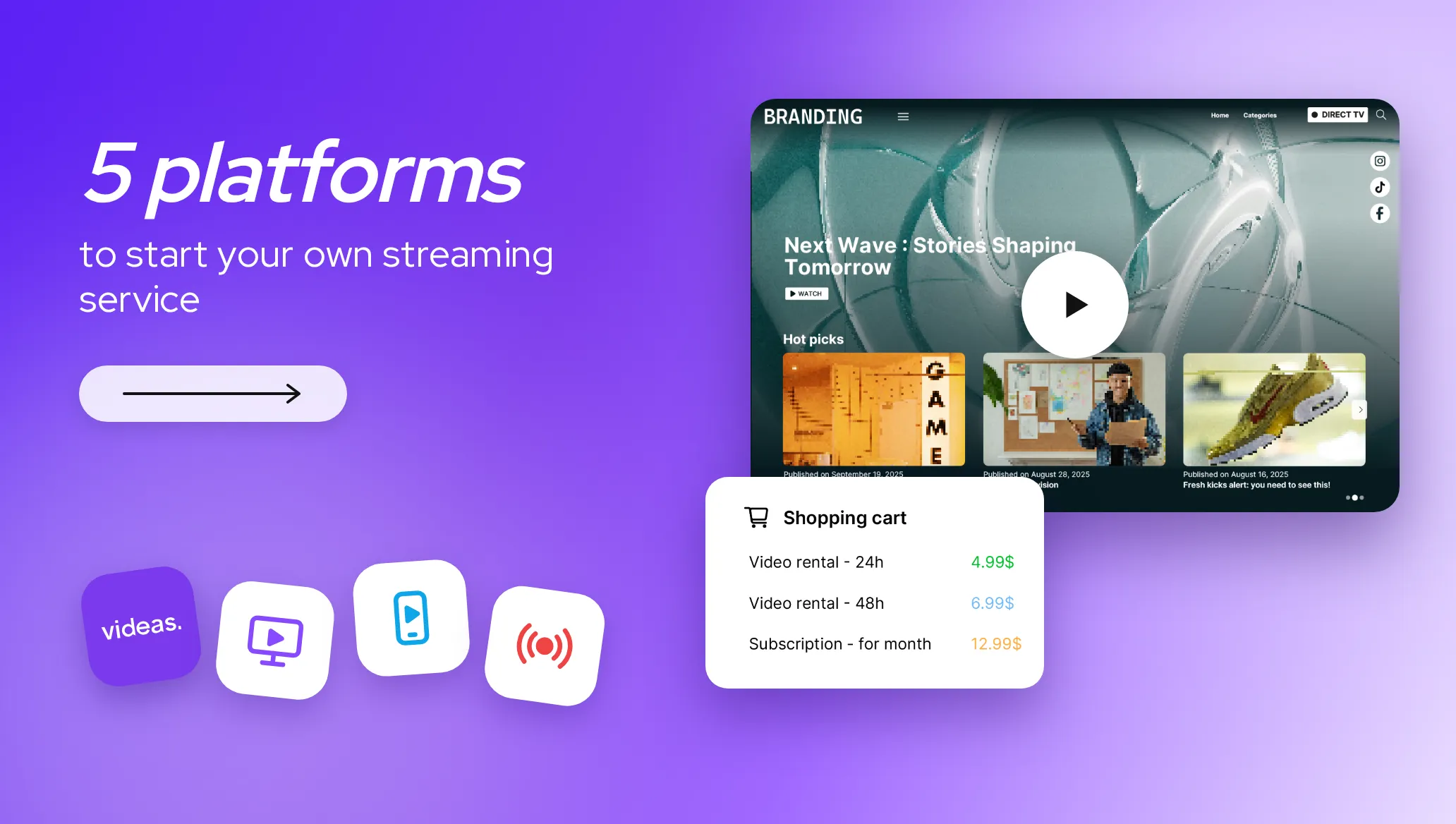
The 5 best platforms to start your own streaming service in 2026
There's no single best platform for launching a streaming service, only the best one for your situation. Our 2026 comparison, profile by profile, to help you find yours.
Video Platform
Why leave Vimeo: 8 reasons to convince you
Bandwidth cut off mid-spike, a catalog capped by tier, a bill that climbs without warning, Vimeo On Demand shutting down. Here are the reasons teams actually give for leaving Vimeo, one by one.
Video Platform
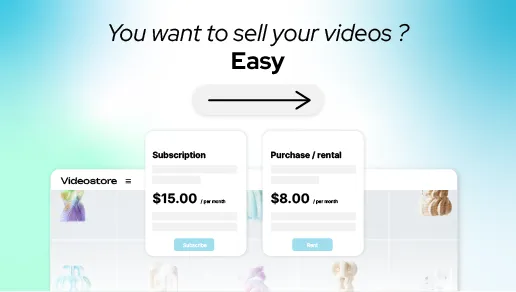
The VOD platform, and how on-demand video gets paid for
VOD (Video on Demand) allows users to watch videos at any time. Discover how to create your own VOD platform with Videas.