6 Brightcove alternatives, and what it takes to get in
Videas, Kaltura, Vimeo, Wistia, Dacast and Mux: which ones publish their prices, which go through a quote and an annual commitment, and what each one actually covers.
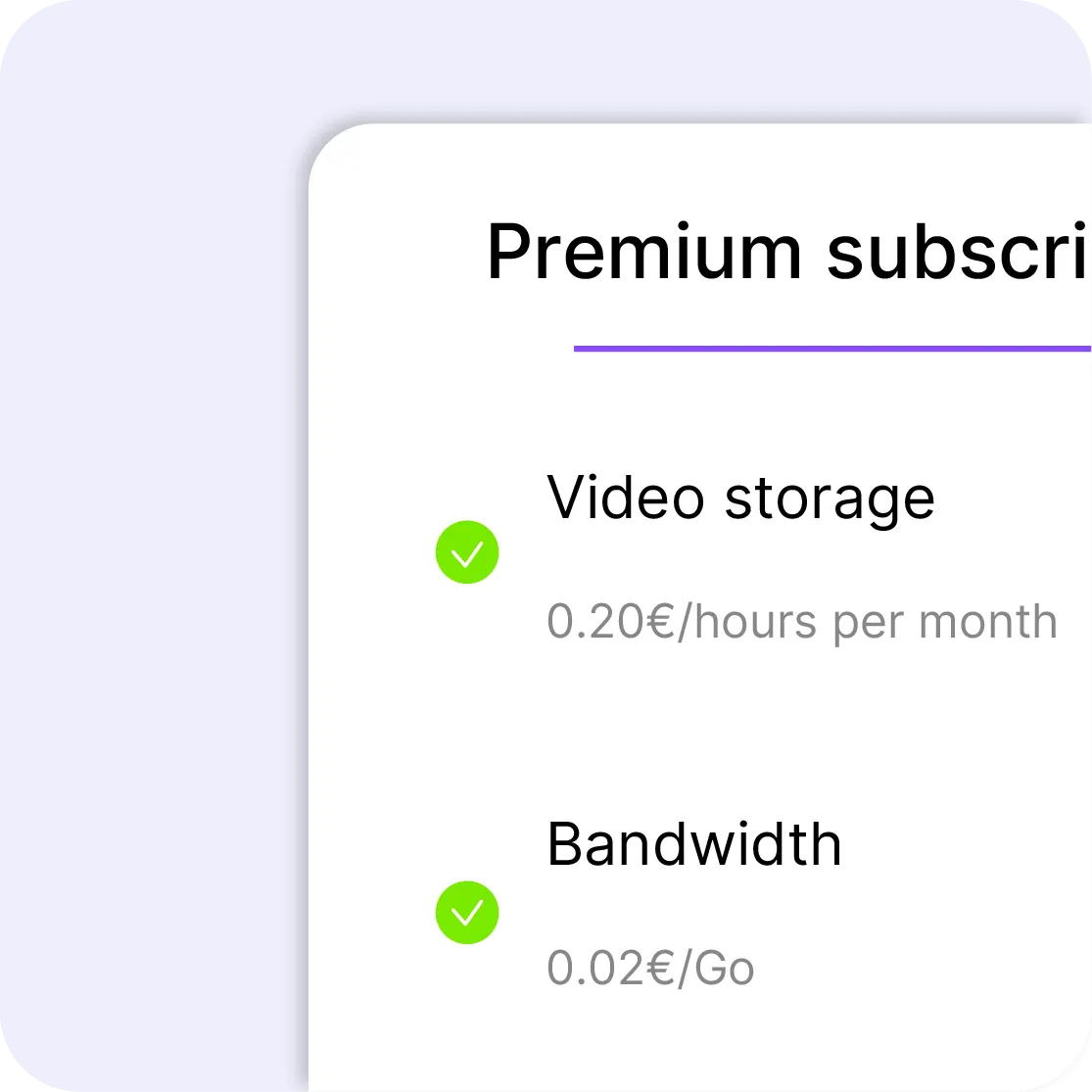
Brightcove publishes no prices: its three studios, Marketing, Communications and Media, are all sold on quote, with an annual commitment and a project-style deployment. Worth knowing before you compare: Vimeo and Brightcove have answered to the same owner, Italy’s Bending Spoons, since September 2025. Videas publishes its prices and bills by usage, €0.20 per stored hour and €0.02 per GB delivered.
Ranked by proximity, from the one covering Brightcove’s own scope to the one aimed at an entirely different customer: published price or quote, self-service account or project, and where the videos are hosted.
Our platform
Videas
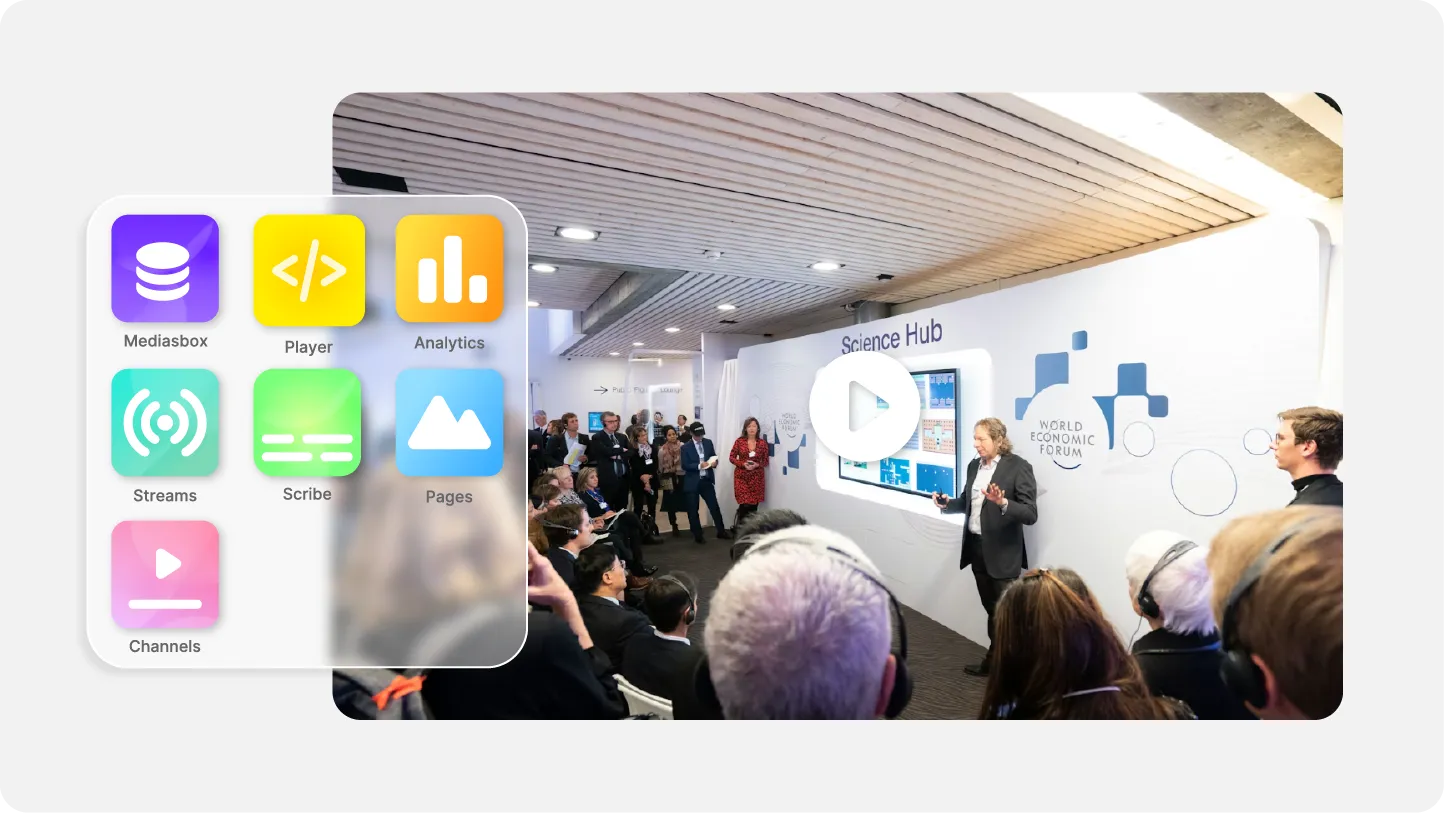
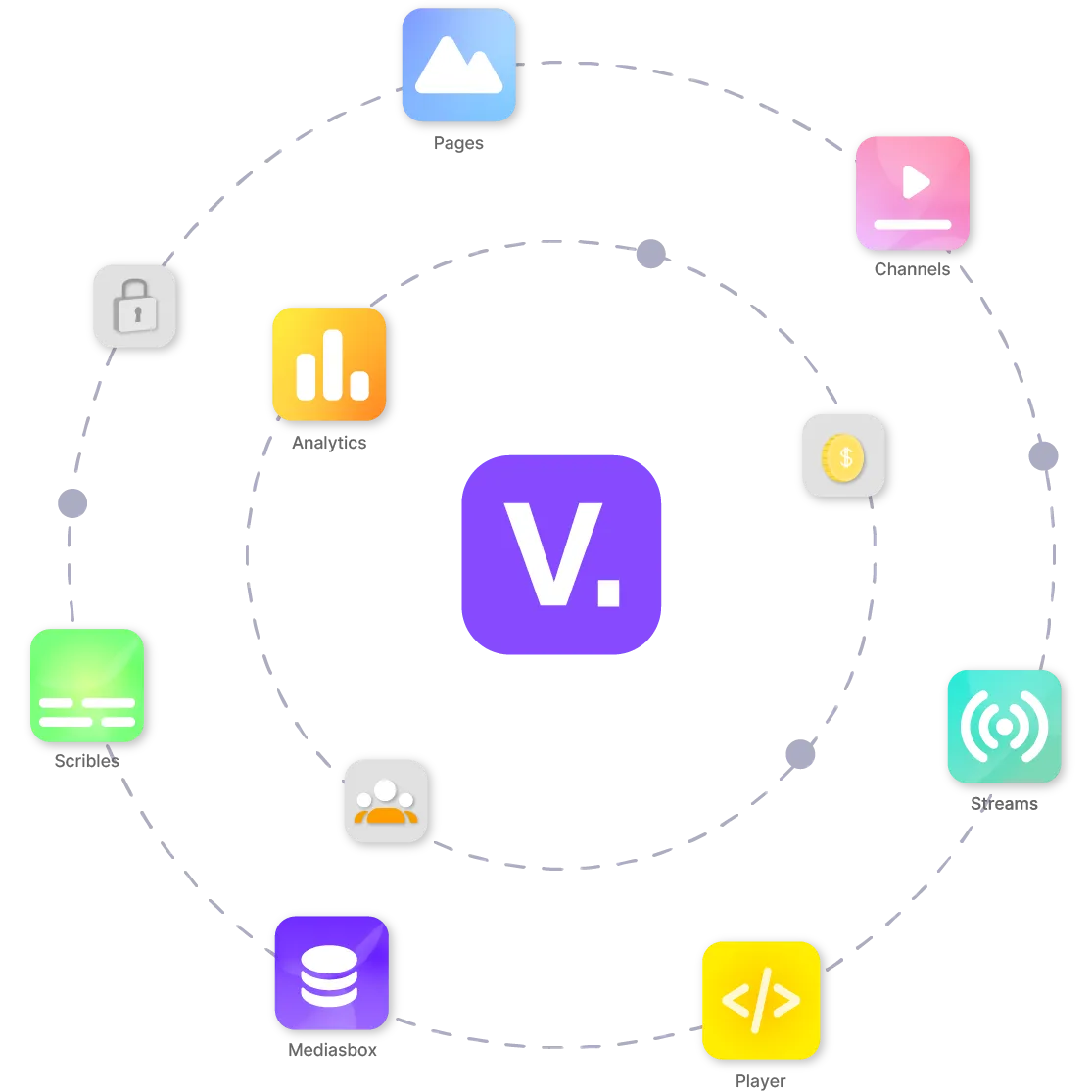
The complete business video platform: player, channels, live, analytics, AI captioning and monetization, at a published price.
Best for: organizations that want an enterprise suite’s scope without the project or the dedicated technical team, with SAML and OpenID Connect SSO, an account open the same day and a bill that follows usage.
Where it falls short: native OTT apps for phones and TV sets are still in development, the channel plays in the browser on every screen; and running several brands under one contract has none of the granularity Brightcove negotiates for a group.
The other enterprise suite: video portal, webinars, virtual classroom, town halls and APIs, sold as a dozen separate products.
Best for: universities, schools and large accounts that want video wired into their learning platforms and their intranet, with a contact for every building block.
Where it falls short: the video portal, the central product, stays on quote, every block has its own grid and contract, combining two products is negotiated, and the hosting region is not published. The free trial stops at the APIs, at $20 a year plus usage.
The generalist at a published price: a polished player, channels, live and monetization, with no sales rep to call for a number.
Best for: teams leaving the quote and the project behind for a platform their agencies already know, on a grid they can read in thirty seconds.
Where it falls short: it has had the same owner as Brightcove since September 2025, Italy’s Bending Spoons, so moving to Vimeo is not moving house; video count and bandwidth are capped per tier; data is hosted in the United States, the player drops third-party cookies, and the enterprise features end up on quote as well.
Video in the service of marketing: calls to action, capture forms and CRM hand-off, built into the player.
Best for: marketing teams that want to measure video engagement and feed their campaigns, without an enterprise suite’s machinery.
Where it falls short: $79 a month on Business billed yearly, $25 per seat past three, $329 for attribution in HubSpot or Marketo, and both SSO and protected playback on quote; no real media library with folders, and hosting outside Europe with third-party cookies in the player.
Live and on-demand streaming at a published price: pay-per-view, subscriptions and more than 135 currencies, from $39 a month.
Best for: broadcasters and organizers whose core need is paid live, conferences, shows and competitions with their replay, and who want a paywall without negotiating a contract.
Where it falls short: plans are billed yearly, the paywall and the delivery volume both depend on the plan, a commission is added to sales, and none of the multi-brand management or OTT app work Brightcove is bought for is covered.
Mux
Video delivery as an API, billed by the minute: encoding, storage, delivery and live, with nothing to negotiate.
Best for: product teams with developers who want to build playback into their own application and pay strictly for what they stream.
Where it falls short: it is a building block, not a platform: the back office your team works in is yours to build, four separate per-minute meters have to be estimated one by one, the dashboard is minimal, and support is self-service documentation.
An enterprise suite’s scope, a published price, and nobody to hire in order to use it.
Kaltura
A campus or an intranet to equip, learning platforms to wire in, and a budget negotiated block by block.
Vimeo
A published grid, a polished player, and a handful of videos to publish.
Wistia
Campaigns to measure, and video treated as a landing page.
Dacast
Paid live events, a paywall, and a price you can read before signing.
Mux
Developers on the team, and playback to build into your own product.
They deliver at scale, with no dedicated video team
4 TB of library and a million visits a month at ONISEP, 24/7 delivery to airlines at Safran Nacelles, weekly lives at Crédit Agricole: three organizations at the scale Brightcove addresses.
No price is published. The offer is organized into three studios, Marketing, Communications and Media, each broken into Starter, Essential and Premium tiers depending on the studio, all on quote after a sales conversation. Each tier fixes its own scope, ten live hours on the Communications studio for example, and the contract is signed by the year. Taken from its website in November 2026.
Which alternatives publish their prices?
Videas, by usage: €0.20 per hour of video stored per month, €0.02 per GB delivered with 1 TB free every month, €10 a month per channel. Vimeo, Wistia and Dacast publish monthly tiers, and Mux publishes per-minute rates. Kaltura only publishes a grid for its APIs. A published price does not mean a small budget: it means you can make a decision without waiting for a meeting.
Can an annual commitment be ended early?
Not before its term, that is what the contract is. What you can prepare is the handover: you open a Videas account alongside it, with no commitment, migrate the catalog while the subscription runs, and switch the integrations over on the renewal date. Migration is free, and you keep a mapping table from every old embed code to its new one.
Does replacing Brightcove need a technical team?
Not with Videas: the interface is built for a communications or marketing team, and embedding a video is a copy and paste. Kaltura expects a technical contact for every block, and its API product a developer on staff. Bunny, which we left off this list, is an infrastructure block: the back office is yours to write.
What about mobile and TV apps?
That is Brightcove’s strong point, and what its OTT offer charges for. With Videas, native apps are in development: the channel is a website, which opens in the browser of a phone, a tablet or a connected TV. If your project depends on an app published in the stores, tell us before you start.
Who hosts the videos in the EU?
Videas, on infrastructure we run ourselves, with no transfer outside the European Union and no advertising cookie in the player. Brightcove advertises a European region too, to be negotiated into the contract. Vimeo, Wistia and Dacast host in the United States, Kaltura does not publish its region, and Mux lets you pick a storage region at setup.
Is automatic captioning included?
With Videas, yes, in more than 100 languages, translation included, and captions can be corrected in an editor. With Brightcove, it is a module billed on top, to enable and budget separately. Kaltura includes it in its products, Wistia offers it as an add-on, and Vimeo limits it by plan.
Which platforms did you leave out, and why?
JW Player, which most comparison lists name first, because it merged with Connatix, trades as JWX and publishes no price on any of its three pricing pages: it is the same purchase as Brightcove, and its centre of gravity stays playback and ad revenue rather than hosting and encoding. Muvi, because it packages OTT apps rather than the multi-brand programs Brightcove is bought for. Bunny and api.video, because one is a developer CDN with no editorial back office and the other covers the same ground as Mux. Panopto, because it comes from lecture capture and is also sold as a project. YouTube, because delivery paid for in advertising and suggested videos is not a business platform. And the creator platforms, Uscreen or Kajabi, because they sell a subscription to a community, not an organization’s video.
How long does a switch take?
The account opens in minutes, and our team migrates the catalog for free: you give us access to the export, we take over the files, titles, descriptions and captions. The timeline depends on the volume, not on a project plan. A Brightcove deployment, by contrast, is counted in months, between negotiation, configuration and training.
How much does Videas cost?
€0.20 per hour of video stored per month, €0.02 per GB delivered with 1 TB free every month, and €10 a month per channel. No subscription, no commitment, no seats to buy: you pay for what you use, drawn from a prepaid credit wallet. Signing up is free, with €5 in credits on signup and every month after.
A cookie?
We measure the site’s audience to understand what is useful to you. No advertising, no data resale. Cookie policy
Your preferences
Strictly necessaryAlways on
Your language and this consent choice. Nothing is shared with a third party.
Enable detailed measurement
Navigation journeys and audience comparisons. Sets a cookie kept for 13 months at most and sends the visit to Google.