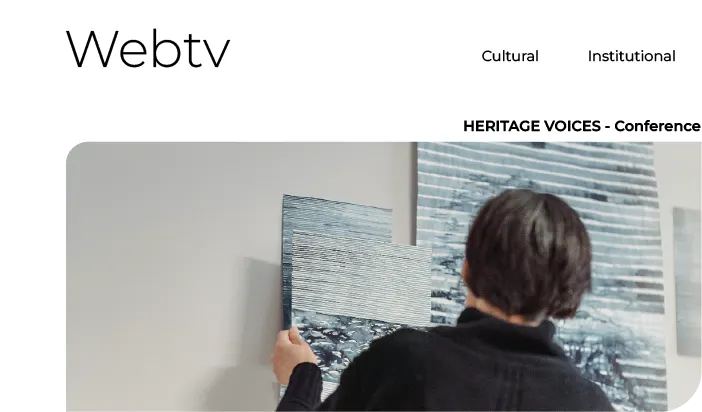
20 TBof rushes, reportage and stills preserved
A collection no drive will hold
The Lens-Liévin urban authority preserves its audiovisual heritage in a combined video and photo library, and decides what goes to the press and what stays internal.
Video is transcoded, played and delivered the way a video platform does it — and stills, audio and documents each get their own record, player and share link.
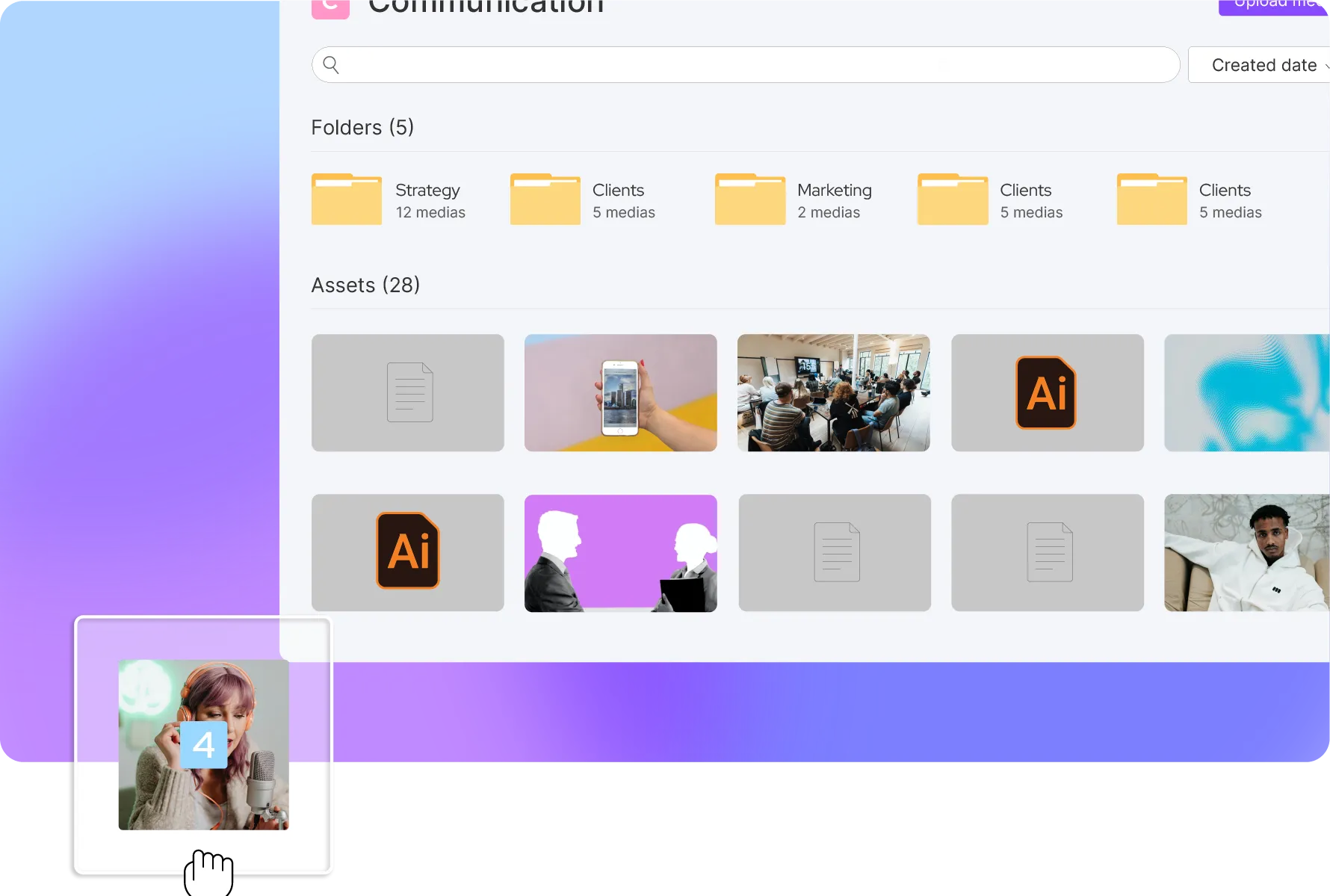








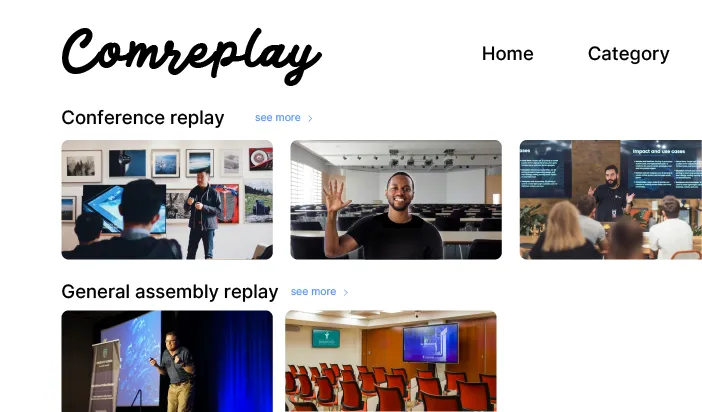
You have years of shoots, rushes and stills, and nobody left who can say what sits where. Mediasbox indexes every asset by its metadata, opens a workspace to everyone who contributes — a department, a subsidiary, a region, a partner — and keeps the whole thing searchable for as long as you want. All four players can be seen in action in the demos, image gallery and PDF viewer included.
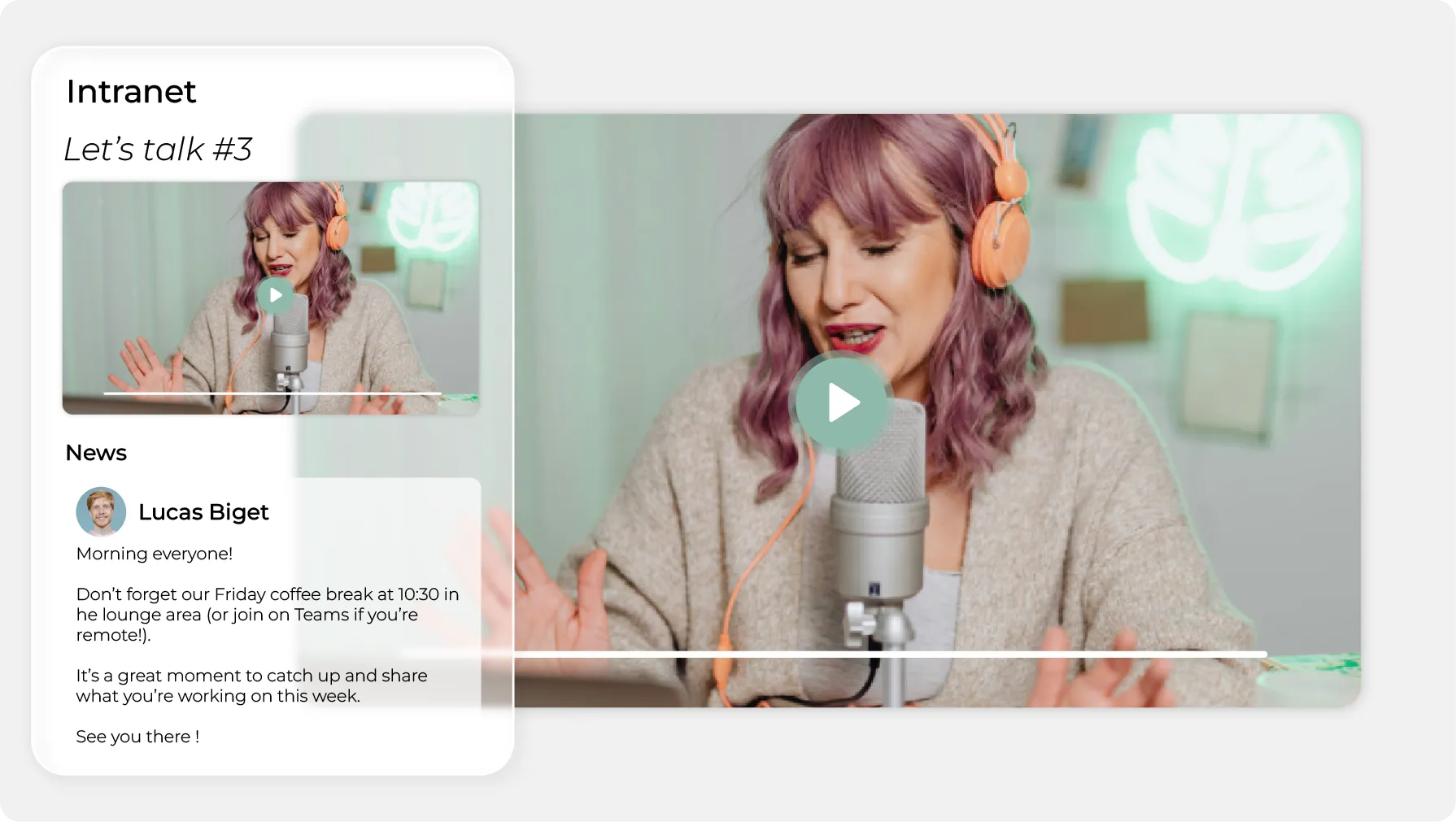
Here they are transcoded on upload, played in adaptive streaming on a player in your own colours, and embeddable on any page — without a second tool in the chain.
Every asset carries its metadata — title, date, rights holder, keywords — and the search runs on those.
Search combines metadata, tags, dates and formats across the entire library at once.
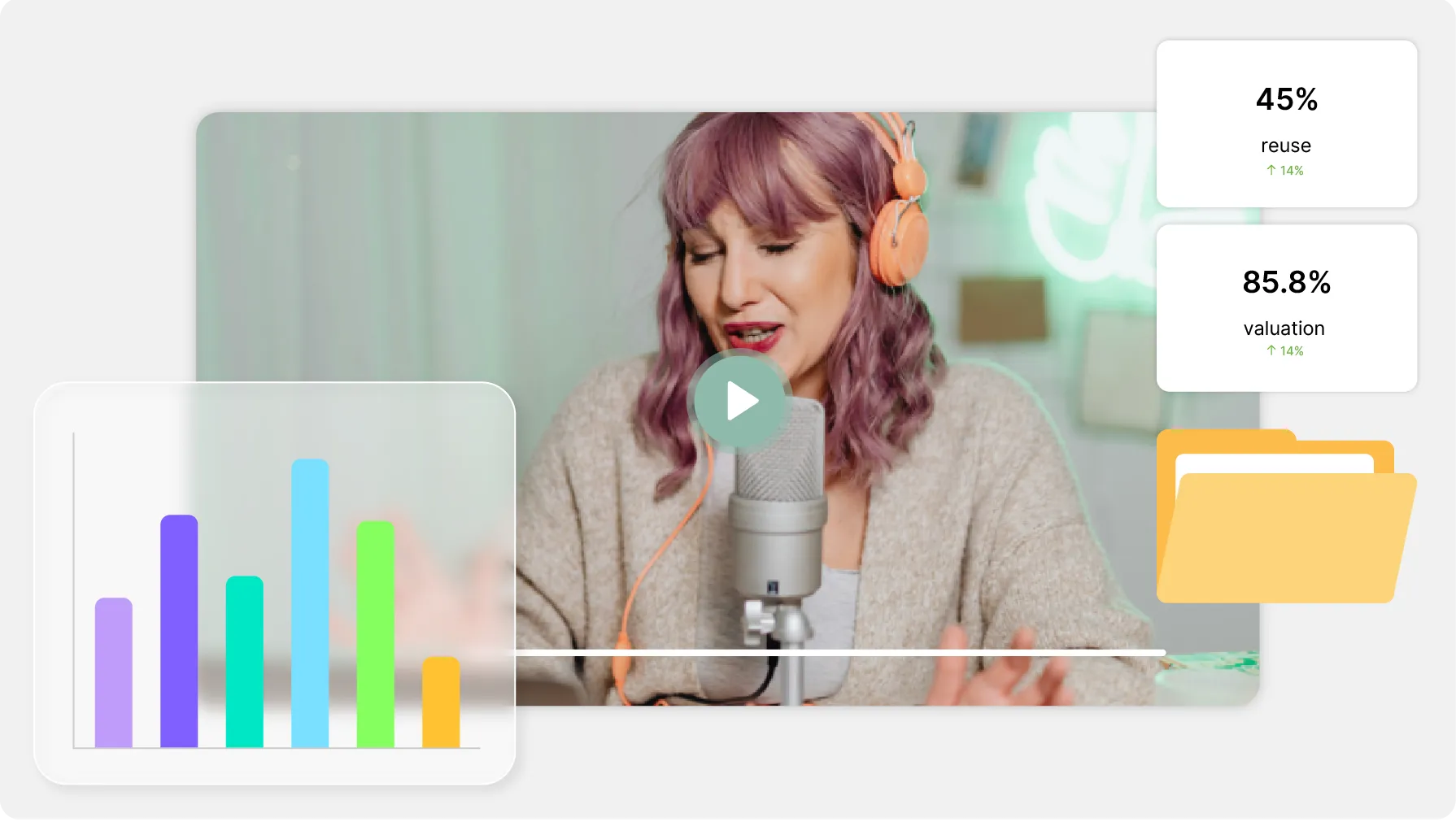
What is indexed can be found, so it gets reused: a story shot in 2015 comes back for today's campaign.
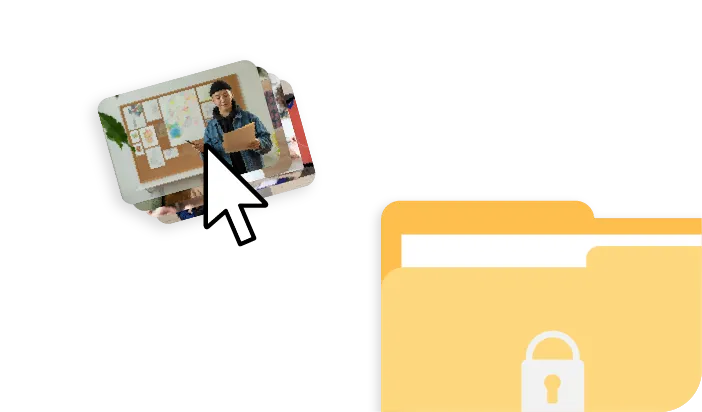
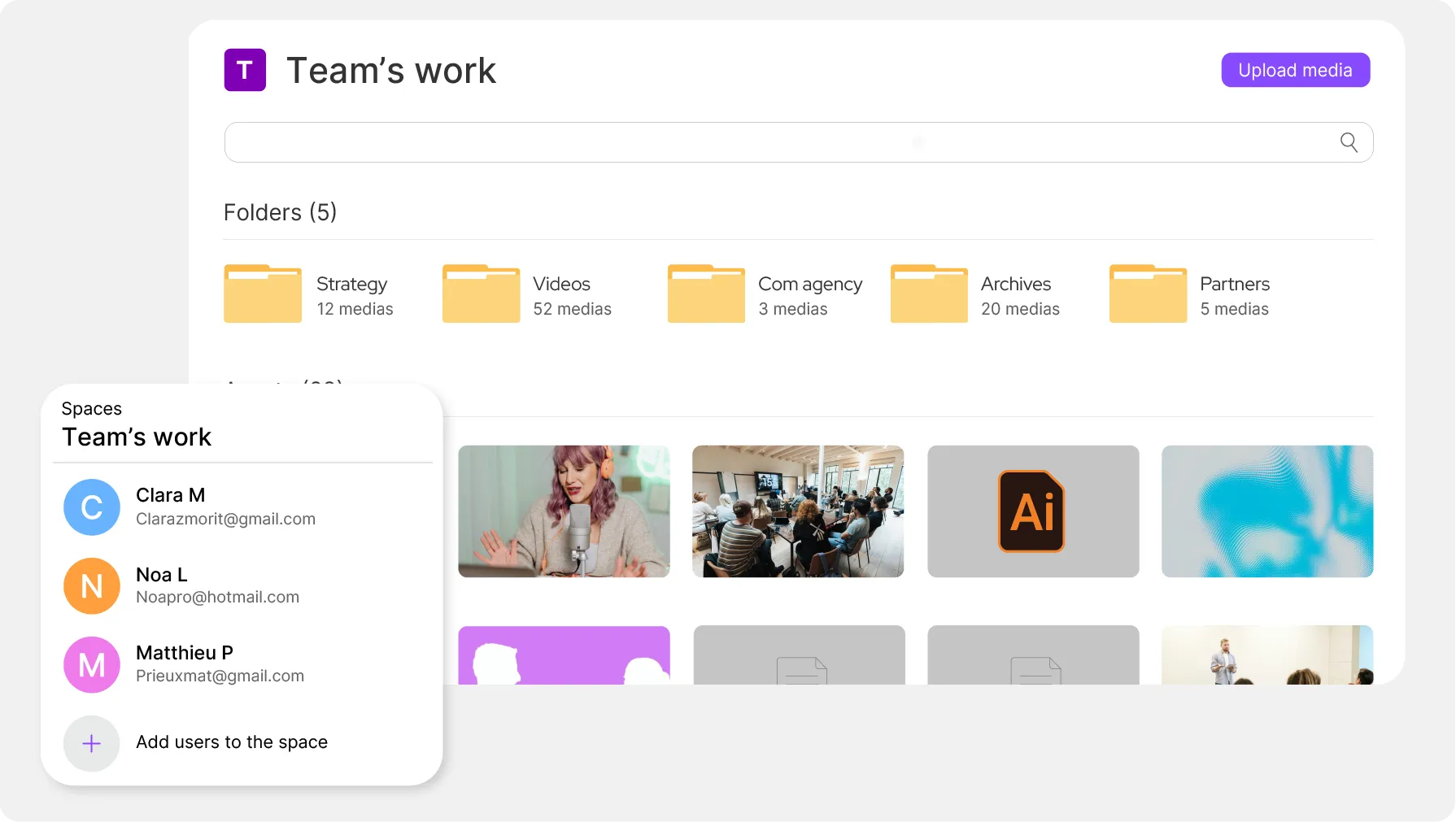
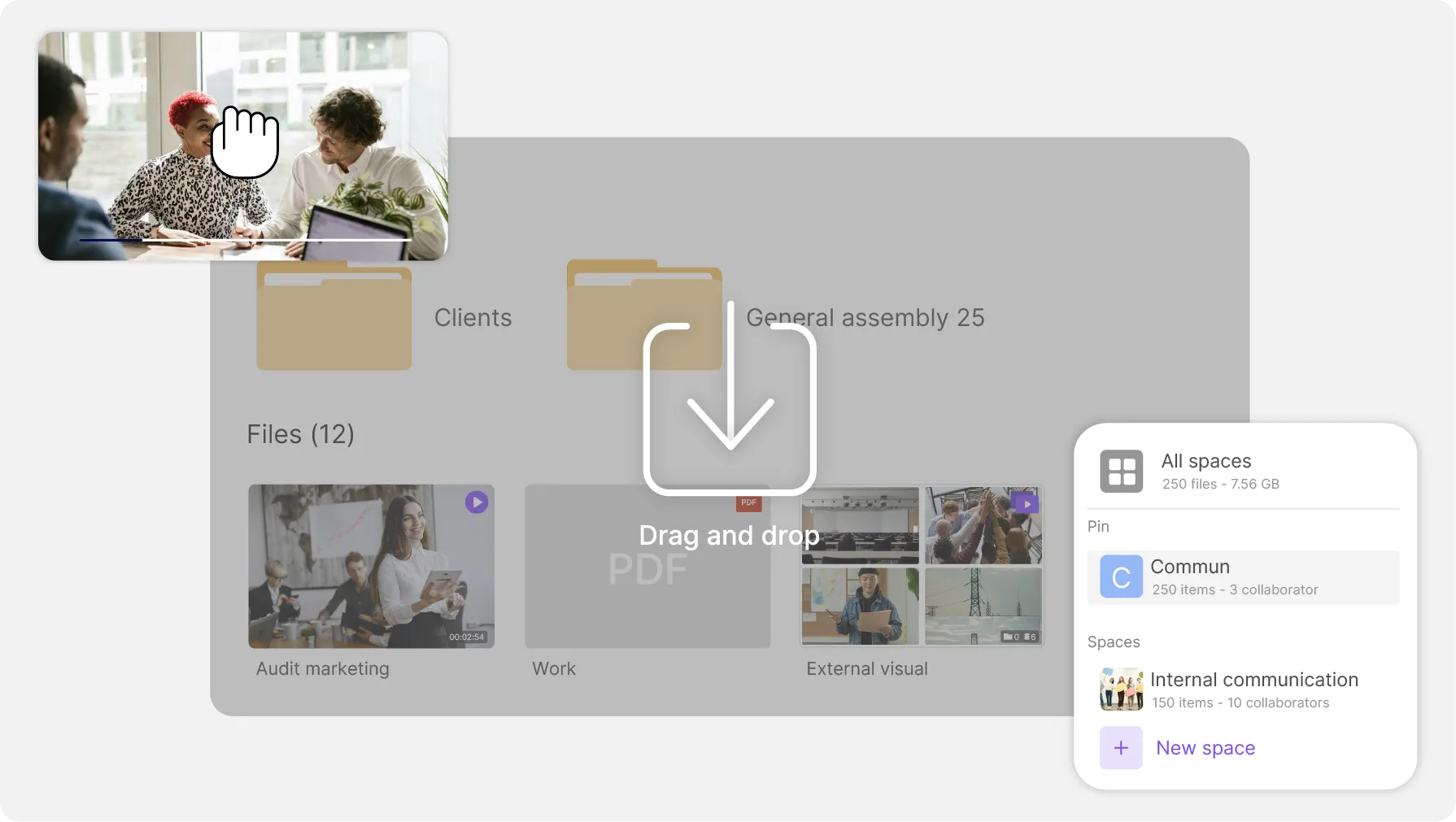
Each department, subsidiary, region or partner gets its own workspace, and sees nothing but its own material.
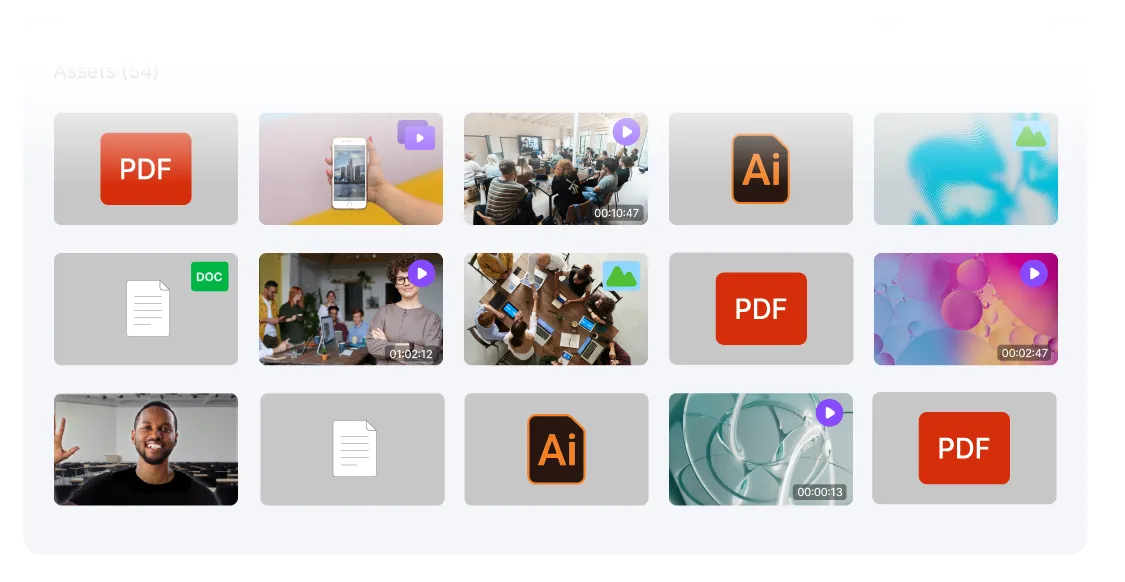
Every type is a medium of its own, with its own record, metadata and player: a gallery for images, a waveform for audio, a viewer for PDFs. All of them are shared by link and embedded on a site, and grouped into collections — one per type.
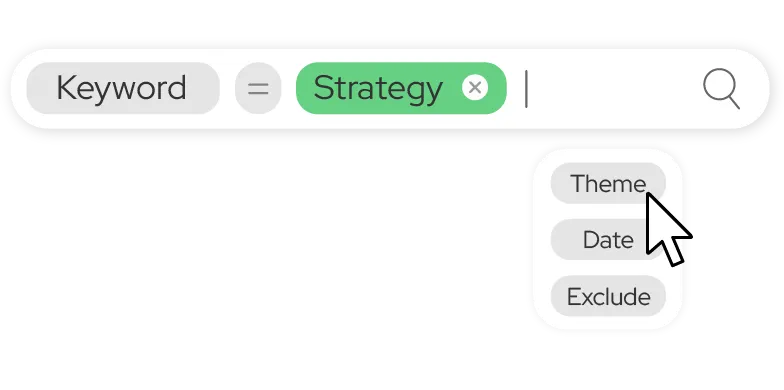
Filter by tag, date, format or your own descriptive fields. Indexing is what separates a video library from a shared drive that has overflowed.
Expose a collection to your teams, to the press or to the public from the same library, without maintaining a second copy of it.
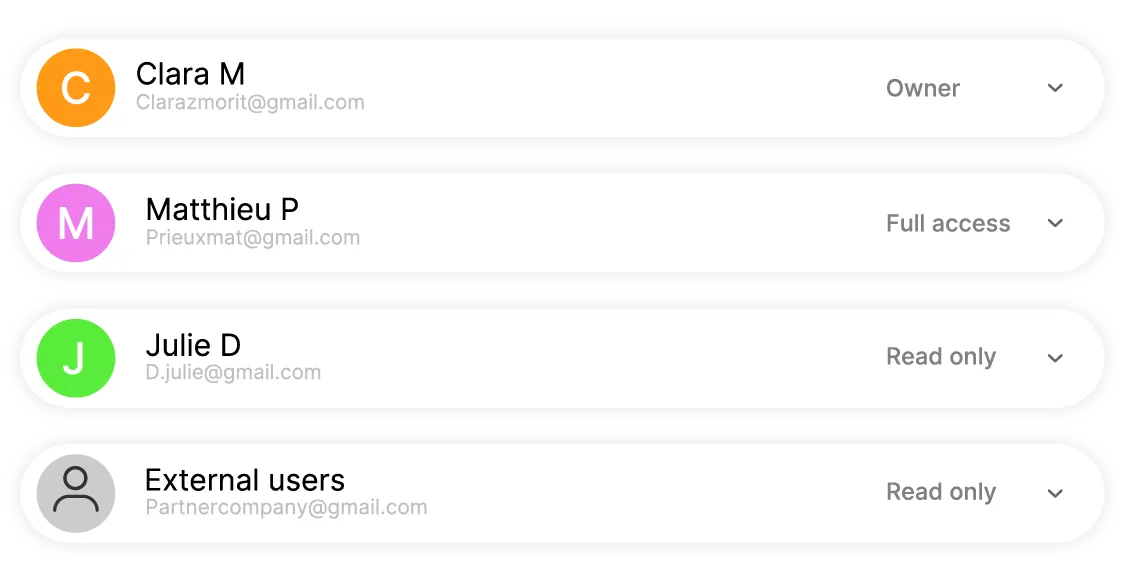
In Videas you open a workspace for each department, subsidiary, regional office or outside partner: they file their own material, you keep control of the rights.
Your teams file and find assets in the same space, instead of passing them around by link or on a hard drive.
Put any asset on your intranet, your CMS or your website with the same embed code — a video, a podcast, an image gallery or a PDF — or drive the library through the API.
Videas counts plays, hours watched and bandwidth, asset by asset and workspace by workspace.
An indexed collection becomes a resource again: communications, training and marketing draw on it instead of shooting afresh.
20 TBof rushes, reportage and stills preserved
The Lens-Liévin urban authority preserves its audiovisual heritage in a combined video and photo library, and decides what goes to the press and what stays internal.
4 TBand several hundred partners filing their own material
ONISEP indexes its video library by metadata and opens a workspace to each partner, who submits content without going through the central team.
26regional video libraries, autonomous and walled off
France Travail gives each regional office its own workspace, its own rights and its own territory-level figures, inside one platform and one GDPR framework.
Videas does not do the indexing for you: we give you the fields and the search, and your contributors enter the metadata. And there is no ready-made plugin into your information system.
€0.20
per hour of video stored, every month
€0.05
per gigabyte of stills and documents
€0
to migrate your existing catalog
There is no subscription: you draw down a prepaid credit wallet, topped up whenever you decide to. A thousand hours of stored video comes to €200 a month, on top of what your viewers actually watch — €0.02 per gigabyte delivered, with the first terabyte free every month. And our team moves your catalog over from Vimeo, YouTube or a Drive at no charge.
Videas enabled us to structure our video communications at the national level while giving each region the tools to operate independently. GDPR compliance and accessibility were non-negotiable prerequisites, and Videas delivers them natively.
Videas enabled us to centralize the management of thousands of educational videos while simplifying interactions with our partners. The ONISEP TV platform has become an essential tool for distributing our content to millions of students and families.
A DAM — digital asset management — centralizes your digital files, describes them with metadata and makes them findable. Videas is one, built around video: video is transcoded, played and delivered natively. Stills, audio and documents are not attachments for all that — they are media in their own right, with their own record, their own player, their own share link and their own collections: an image gallery, an audio playlist. A document can also be attached to a video, but nothing requires it — the Lens-Liévin district keeps a photo library alongside its video library that way.
Through metadata, not file names. Every asset carries a title, a date, a description, keywords and your own descriptive fields; search combines those with format and date filters. That is what lets ONISEP hold four terabytes without losing track of a single story.
Yes, and it is the capability our largest clients buy first. In Videas you open a workspace per department, subsidiary, region or outside partner. Each files its own content and reaches nothing else; you keep administration, rights and the view across the whole library.
Yes. Video library and photo library sit together in one collection, along with PDFs, audio and attachments. The Lens-Liévin urban authority keeps twenty terabytes of rushes, reportage and stills that way, without running two separate tools or two sets of permissions.
Our team handles it, and it is free. We move your videos across from Vimeo, YouTube, Google Drive, Dropbox or OneDrive, with the files, the metadata and the thumbnails. You do not re-upload by hand, and your collection stays reachable throughout.
For as long as you keep your credits topped up: storage is billed monthly, with no maximum duration and no automatic purge. Nothing is deleted without your action. Files sit on redundant backups hosted in France and stay readable in their original formats.
Yes, and selectively. One collection can stay internal, go to the press over a private link, or be published openly in a channel carrying your brand. That is what Télégohelle does: controlled delivery to journalists, a public portal for everyone else.
In France, with French hosting providers, under GDPR and with no transfer outside the European Union. The player sets no cookies and no trackers, which is what lets France Travail and ONISEP publish without a consent banner and without exposing their visitors.
No, and it is a limit worth knowing before you sign. Videas preserves, backs up and logs access, but does not deliver the integrity guarantee of evidential archiving under standards such as NF Z42-013. For a legal obligation of that kind you need a certified provider.
Video storage is billed at €0.20 per hour per month, other files at €0.05 per gigabyte. A thousand hours therefore comes to €200 a month, plus the delivery you actually use at €0.02 per gigabyte, with the first terabyte free each month. No subscription.